Cat Biting? What Helped Bella Bite Less
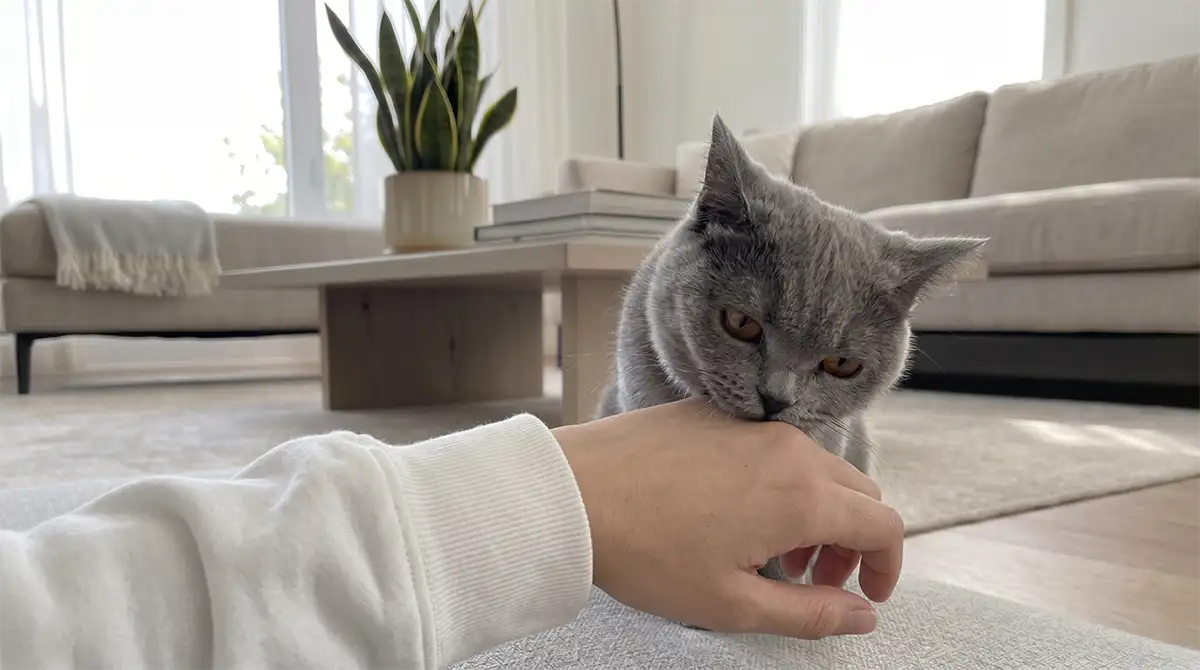
When Bella first came home, her meows sounded soft. Kittenish.
I bragged to my friends back then.
I told them British Shorthairs never bite. My Bella was a little angel.
I got proven wrong in three months. Hard.
How It Started
At first, she would nip my fingers mid-play. Out of nowhere.
Soon after, she started lunging at my ankles. The second I walked in and changed my shoes.
One bad day, she left a bright red mark on my wrist. With her teeth.
I sat alone in my small London flat. Staring at the irritated skin on my wrist.
I spent the entire night scrolling through Google. Reading every article about why British Shorthairs bite.
I texted every cat owner friend I had locally.
I tried all the wrong methods. Hit countless roadblocks.
After changing how I played with and handled her, I noticed fewer bites. She still nips occasionally.
Today, I am sharing my real experience. I hope it helps fellow cat parents struggling with feisty biting kittens.
Don’t Scold Your Cat Right Away
I was upset every time Bella bit me. Confused too.
I even wondered if British Shorthairs naturally had bad temperaments.
But I gradually realized something.
Play, fear, overstimulation and pain can all contribute to biting. I missed Bella’s cues, but not every bite is a training problem. New or worsening biting warrants a vet check. Cats Protection explains the different causes.
Mistake 1: I trained her to bite human hands
Bella was about six months old when I brought her home.
She was tiny. Fluffy. Utterly irresistible.
I often teased her with my bare hands. Watched her chase and nibble at my fingers.
Her nips seemed harmless back then.
I thought it was cute. Never stopped to correct the behavior.
Slowly, she picked up a wrong habit. She learned that human hands were for chasing and biting during playtime.
As the habit continued, I began to feel how sharp her teeth were.
Her playful nips turned into sharp, painful bites.
That was when I realized. I had created this problem myself.
Mistake 2: I Assumed Chewing Meant Teething
Back then, I thought teething discomfort might explain some of her chewing.
I thought her gums looked swollen and assumed they felt itchy. Teething was my interpretation, not a confirmed explanation for Bella’s biting.
Persistent pain, drooling or trouble eating needs a vet check. Cats Protection’s teething advice distinguishes mild discomfort from signs needing help.
I did not prepare any proper teething toys for her in advance.
Everything around her became a chewing target.
She gnawed on my slippers. Frayed my charging cables. Chewed the corners of my sofa.
Whenever my hands were near, she would pounce immediately. Bite down.
I had assumed she was trying to relieve discomfort. Her behaviour alone could not confirm that.
Mistake 3: I over-petted her and ignored her warnings
I was obsessed with cuddling my new kitten.
I never knew when to stop.
I would hold and pet Bella for ages. Even when she clearly did not want it anymore.
She tried to tell me she was annoyed.
She flicked her tail rapidly. Flattened her ears backward.
Her body went stiff in my arms.
I was a new cat owner. I did not understand these subtle cues at all.
I kept petting her anyway.
Biting was her only way to tell me she had enough. Her last resort to ask for personal space.
Changes That Helped Me Manage Bella’s Biting
I made mistakes at the start.
I yelled at her when she bit me. Tapped her head.
It only made her more defensive. More aggressive.
She bit back harder. Out of fear or frustration.
I switched to gentler methods after researching local pet forums. Consulting veteran cat owners.
I noticed improvement, though she still nips occasionally. These were changes I found helpful, not a guaranteed cure or a substitute for checking pain.
Method 1: End all playtime instantly when she bites
Ending play calmly helped me most.
The second Bella’s teeth touched my skin, I froze all interaction. No exceptions.
I stood up. Walked away quietly.
I either sat on the other side of the sofa. Or moved to another room.
I gave her space before inviting her to play again. The point was to stop using my hands as toys, not to enforce a five-minute rule for every cat.
At first, she would follow me around. Meowing softly. Rubbing against my legs to beg for attention.
It was heartbreaking to ignore her. But I stuck to the rule consistently.
Over time I saw fewer bites during play, though I cannot tell exactly how Bella understood the change.
Important note
Never hit your cat. Physical punishment makes cats fearful and distrustful.
Punishment can increase fear and defensive behaviour. It does not teach a cat to feel safe.
Method 2: Redirect her hunting drive to toys
After noticing how often I teased her with my hands, I changed how I played with Bella. I cannot say that habit was the only cause of every bite.
I never used my bare hands to interact with her again.
I set aside 30 minutes every morning and evening. That was time I made available, not a requirement for continuous exercise; keep play brief and voluntary, with breaks.
I used feather wands and mouse-shaped toys. Simulated real prey movement.
I let her chase, pounce, and bite the toys as much as she wanted.
This helped her burn off her excess kitten energy. In a healthy way.
When she instinctively lunged for my hands mid-play, I would quickly slip a toy in front of her mouth instead.
I praised her for playing with toys and used small treats. The timing matters: do not turn a bite on skin into an immediate food reward. Calmly end that interaction and offer appropriate play once she has settled.
She more often turned to the toy instead of my fingers.
Method 3: Stock up on teething supplies
I bought chew sticks and catnip-infused fabric toys while I thought she might be teething.
I cannot identify the chew-stick product or assess whether it suited Bella. I would not use my old daily routine as a feeding recommendation.
I noticed less biting during this period, alongside other changes. That cannot prove a chew treated mouth pain.
Supervise play, keep damaged toys and electrical cords out of reach, and do not substitute chews for a veterinary mouth check. Count edible treats within the food allowance.
Method 4: Learn your cat’s “stop” signals
I took time to study my cat’s body language.
Look at the whole cat, not one sound. Signs to stop the interaction can include:
- Fast tail flicks
- Flattened ears
- Tense body muscles
- Hissing or growling
Purring alone does not tell you whether a cat is comfortable.
Now, the second I spot any of these cues, I stop petting her at once.
I put her down. Let her rest alone.
I no longer force unwanted affection on her.
Stopping when she tensed up made our interactions calmer. I cannot assign one motive to every bite.
Bella Now: Fewer Bites, Still Her Own Boundaries
Those early days after Bella came home feel very different now.
I notice fewer bites now.
On rare occasions when she gets overly excited during play and accidentally touches my skin with her teeth, she instantly retracts them.
At other times she seeks out a nuzzle, especially when I let her choose whether to approach.
Final Thought
Biting can reflect play, fear, overstimulation or pain. Persistent problems may need a vet and a qualified feline behaviourist.
For Bella, changing my own play and handling made the biggest difference. The aim is a safer, more comfortable relationship, not to make every cat enjoy cuddling.